If you’re putting time into content but your clients aren’t actually booking, there are 5 common mistakes that we’ve seen in our combined 15 + years in business that will make your conversion copywriting and client-getting so much easier.
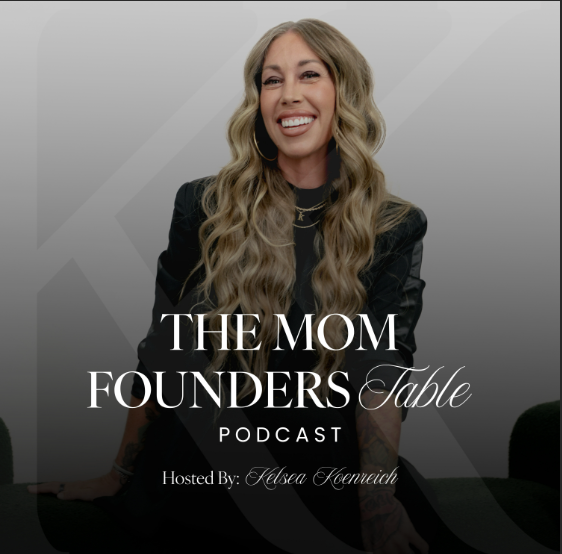
I recently sat down with Kelsea Koenreich on The Mom Founders Table podcast to dig into the conversion copywriting strategies that separate the booked-out experts from the ones spinning their wheels. Kelsea is a business strategist who works with millennial mom founders to run profitable operations with less owner dependency.
Here’s what we uncovered: The biggest conversion copywriting mistakes are about being unclear, too broad, or so focused on visibility that you forget to connect emotionally with the person who actually buys.
If you’ve been wondering:
What makes conversion copywriting actually work?
Why do some entrepreneurs have full client rosters while others have great engagement but empty pipelines?
What are the concrete shifts that move someone from “nice post” to “I’m booking a call”?
This post is for established service providers, coaches, and consultants who have the skills, the expertise, and the mission to make an impact. You’re asking: “How do I talk about what I do in a way that moves the right people to action?”
1. Say What You Actually Do (Stop Hiding Behind Differentiation)
This one sounds obvious until you realize how many accomplished entrepreneurs bury their actual offer under layers of branding language…and how much it costs them in conversion copywriting performance.
Kelsea shared her own spiral: “I have such a wide skill set and because I’ve been doing what I do for so long and I’ve worked with people in so many different industries… I felt like if I didn’t make it big and bold and whatever, that like it wasn’t fully representative of me.”
People are searching for the problem you solve.
This is one of the most common conversion copywriting mistakes. If you’re a “voice architect” or “wellness advocate,” Google and AI LLMs have no idea who you serve. But if you say “speaking coach” or “gut health practitioner”, then you’re searchable.
This matters from both a conversion copywriting and an SEO perspective. Your ideal clients are typing specific terms into search. They’re asking Gemini or Claude or ChatGPT very concrete questions: “How do I improve my speaking skills?” or “What can I do about bloating?” They’re not looking for poetic language or a clever title that differentiates you. They want the answer to their pain point.
When Kelsea finally gave herself permission to say “I’m the advisor that helps moms run a high-profit business with less owner dependency,” something shifted. That sentence is simple, grounded, and immediately tells someone whether you’re talking to them.
Specific messaging makes one person feel like you’re talking directly to her.
And that’s when she clicks, reads more, and books a call.
Vague messaging sounds like it could be for anyone and ends up helping no one.
Pro tip: Go back to your sales calls, client emails, or testimonials. What word do your clients use when they describe what you do? That’s often the language you need to start with in your conversion copywriting.
For more detailed conversion copywriting fixes with before-and-after examples, check out What I’d Fix First to Make Your Copywriting Convert.
2. Know Your Ideal Client So Specifically You Can Call Out Her Day
It’s not enough to say “my ideal client is a female entrepreneur.” What separates good conversion copywriting from breakthrough conversion copywriting is specificity that makes someone feel seen.
Kelsea walks her clients through an exercise: “Sit in your client’s seat and write down what a day in the life looks like for her. What are her thoughts? And then what are the physical manifestations of those thoughts? Like, how is she moving?”
The difference between generic and powerful conversion copywriting comes down to emotional resonance.
Here’s what that looks like in practice:
Generic: “You’re overwhelmed.”
Powerful: “You’re standing in your kitchen cooking dinner while you’re answering emails and your kids are yelling at you.”
One feels generic. The other feels like someone sees you, as if they are a fly on the wall.
When you know your ideal client that well, you start speaking to her actual emotions—not just her pain points. And you can connect those emotions to the transformation she really wants. This is what makes conversion copywriting psychology actually work.
Megan walked through her own ideal client portrait: “She is an established business owner who is highly skilled at what she does, but she is overwhelmed by the demands of content creation and marketing. She wants to stay in her zone of genius while partnering with a trusted expert who can turn her voice, values, and vision into a strategic marketing system and copywriting that brings in lined clients without burning out.”
Notice what’s happening here:
- Who she is: established, highly skilled
- Where she’s at: overwhelmed by content creation (meeting her emotionally, not judgment)
- What she wants: to stay in her genius, partner with someone trustworthy
- The real outcome: more clients, less burnout
She’s not just saying “I work with business owners.” She’s painting a specific woman’s life and showing that she understands the edges of her struggle. This is the essence of conversion copywriting that requires knowing your audience deeply.
Specific messaging cuts through the noise because it makes someone feel known. And people book from people who understand them.
Learn more about crafting audience-specific messaging in Mastering Authentic Brand Messaging For Coaches.
3. Speak to Desires and Values—Not Just Problems and Pain Points
There’s a subtle but critical difference between acknowledging a pain point and drilling into it.
When your conversion copywriting focuses only on problems and “you’re doing this wrong”…it does not build trust.
The powerful conversion copywriting psychology comes in when you acknowledge the reality, meet her where she’s at, and connect it to what she actually wants. You’re also speaking to her desires and values.
What she really wants isn’t “to not be overwhelmed.” That’s removing a negative. She wants to “stay in her zone of genius and partner with an expert she can actually trust.” She wants connection, autonomy, and collaboration. Those are values.
When your conversion copywriting speaks to someone’s values, she feels like your offer isn’t at odds with who she is. It’s aligned with who she already wants to be.
Value-aligned messaging doesn’t feel salesy. It feels like permission. And permission converts faster (and with better retention!) than pressure ever will.
For more on this approach, explore Maximize Conversions With These 4 Effective Copywriting Strategies and understand how it all connects to your audience’s deepest drivers.
4. Show Why You’re the Only Choice
Here’s what separates good conversion copywriting from a booked-out client roster: Why should someone hire you instead of the three other people offering something similar?
The answer isn’t usually “I’m better” or “I have more certifications.” It’s what do you stand for? And what does that look like in how you actually run your business?
Kelsea calls this “intentionality.” She’s being very specific about who she works with and how. That specificity is her conversion copywriting differentiation.
You don’t have to be political or controversial to show values-based conversion copywriting differentiation. But you do have to be clear. Here’s what that might sound like:
- You believe service providers should make good money and have healthy boundaries (unlike the hustle-culture coaches)
- You believe good marketing doesn’t require you to perform constantly on social media
- You believe the best solutions are often the simplest ones (not the trendiest)
When someone reads your conversion copywriting and recognizes your values as her values? She stops shopping around because she knows that she needs to work with YOU.
This is especially true for heart-centered service providers. You’re already competing against practitioners who have the same certifications, experience level, or offer. Your values are what attract your best clients in conversion copywriting.
Values-driven differentiation attracts buyers who are aligned and stays around longer.
Repeat Your Message Until You Become Known For It
This might be the most overlooked conversion copywriting strategy, and Kelsea was emphatic about it: “People are like, ‘Oh, but I don’t want to be annoying. I don’t want to… I already said it once, do I need to say it again?’ Like, yes. Yes you do.”
Here’s why: Your audience isn’t sitting around studying your emails like an academic paper. They’re in the grocery line, picking up their kids from school, scrolling between meetings. They’re distracted and on the go, reading on their phones.
One or two mentions isn’t enough in conversion copywriting.
I have a guest who created 12 weeks of content and recycles that every 12 weeks. No one’s ever said a thing about her being “too repetitive.”
Repetition is how you become known for something in conversion copywriting.
It’s how an idea moves from interesting to memorable to action-worthy.
What you mention once, people forget. What you mention consistently, people start to believe. And what people believe, they act on.
You can implement a repurposing system like in this case study: AI Copywriting That Sounds Like You, where we demonstrate how to maintain your voice across multiple formats and channels.
5. Trying To Help Everyone Actually Helps Fewer People
Before we go further, let’s address the guilt that often shows up around niche specificity in conversion copywriting.
Most service providers feel like narrow conversion copywriting excludes people. “But I could help her and I could help anyone. If I get too specific, won’t I miss out on potential clients?”
Actually, no. Broad messaging blends in. It’s vague. And I know you don’t want to be excluding people that you could be helping.
But actually what we’ve seen is that you’ll actually end up helping less people because generic conversion copywriting is so easy to ignore and scroll right past.
When your conversion copywriting could apply to anyone, it feels like it’s for no one.
However, when your conversion copywriting speaks to one specific person, it resonates more deeply.
With specific messaging, the people who are in your ideal client profile feel seen, known, and understood. That’s what converts them into clients.
You can have 100 people who don’t quite fit your conversion copywriting message, scrolling past your content and get no new clients. Or you can speak to 20 people who feel deeply understood, reading your conversion copywriting carefully and book out your schedule.
Go deeper with Mastering Authentic Brand Messaging For Coaches to see how specificity actually expands your reach.
The Real Reason Your Visibility Isn’t Turning Into Sales
This is the thread running through everything we’ve discussed: visibility and conversion are not the same thing in the world of conversion copywriting.
You can have thousands of followers and an empty pipeline. You can have a small email list and a booked calendar.
The difference isn’t how much you’re showing up. It’s how you’re showing up in your conversion copywriting.
Are you visible? Or are you visible to the right person in the right way that makes her want to do business with you?
We both have clients who get very few comments and likes but are fully booked.
The shift from visibility to conversion happens when you get clear on the five conversion copywriting fundamentals we’ve outlined:
- What you actually do (no jargon)
- Who you actually help (visceral, specific, emotional)
- What she actually wants (not what you think she should want)
- Why you’re different (your values, your perspective)
- Say it again, and again (repetition builds recognition)
These aren’t fancy or trendy. But they work because they’re based on how humans actually make buying decisions.
For a deeper breakdown, see The Real Reason Your Conversion Copywriting Isn’t Working.
What a Minimum Viable Marketing System Actually Looks Like
If you’re feeling like you need to do all the things—podcasting, Reels, LinkedIn, email, blogging, speaking, summits…you need to hear this:
You don’t have to do all the things.
A sustainable conversion copywriting foundation looks like:
1. Long-form SEO/GEO content that compounds over time
This could be a YouTube channel, a regular podcast, or a blog. Something that lives on the internet and keeps bringing you traffic years later. A blog post written two or three years ago can still bring in clients today. (Whereas an Instagram post from two years ago is lost in your feed.)
Long-form content builds authority and positions you as someone who knows what she’s talking about. It also feeds your SEO…both for Google and for AI recommendations. This is the foundation of a conversion copywriting system that works.
2. Email marketing as your primary communication channel
Email is where you have direct access to your audience without an algorithm. You’re not waiting for the algorithm to feel generous. You’re talking directly to the people who said “yes” to hearing from you. And email is where the conversion happens.
Check out these 3 Email Marketing Ideas You Can Use This Week
3. Repurposing as your sustainability strategy
One podcast episode can turn into:
- A blog post
- Highlight reels or carousel posts for Instagram
- Multiple email opens (teaser, full episode, deep-dive)
- Threads posts
- LinkedIn post
- Clips for YouTube Shorts
You’re not creating something new every day. You’re creating something excellent once, then making it accessible in multiple formats through your conversion copywriting system.
This is how you stay visible without burning out and it’s a foundational part of The Marketing Strategy That Leaves Room for Rest and Revenue.
FAQ: Questions Your Audience Is Actually Asking
Q: If I’m very specific about my ideal client in my conversion copywriting, won’t I miss out on people who could benefit but don’t exactly fit my profile?
A: You won’t miss them. Your content is visible to everyone. But when you write to one specific person in your conversion copywriting, others who aren’t her won’t feel personally called to. That’s actually a feature, not a bug. It means your ideal clients feel like you’re speaking directly to them—and that’s what converts. See Mastering Authentic Brand Messaging For Coaches for specific examples.
Q: How often should I be repeating my conversion copywriting message? Doesn’t it get boring or annoying?
A: Repetition is how you become known for something in conversion copywriting. And you’re not saying the exact same thing in the exact same way—you’re exploring the same core idea from different angles, in different formats, in different channels. Your blog post goes deep. Your email teases. Your social shows an example. Same conversion copywriting message, different entry points. See 5 Email Marketing Tips For Daily List Growth for tactical application.
Q: What is the conversion copywriting strategy when I do help many different types of people with my offer?
A: Pick one ideal client to lead with. You can have multiple offerings or serve multiple niches…but your marketing should always lead with one specific person. Others will come because they see someone like them thriving. But you’re not trying to be all things to all people in your conversion copywriting. Go deeper with Hone Your Authentic Brand Voice To Build Trust And Credibility.
Q: Should I use AI to write my conversion copywriting if I’m not naturally a writer?
A: AI is a great tool for organization and structure. It’s always best to start with your authentic voice. Brain dump what you actually think about your offer, your clients, why you do what you do. Then use AI to help tidy it up, structure it for best practices, or put it into a format like an email or LinkedIn post. But it always starts with you. See how we use AI and still maintain your brand voice in this case study. For a deeper dive, read AI Copywriting That Sounds Like You.
Q: How long does it take to see conversion copywriting improvements after making these changes?
A: It depends on where you’re starting. And it depends on your marketing ecosystem (more on that here). Consistency matters more than speed. Repetition builds trust, which builds conversion. Check out What I’d Fix First to Make Your Copywriting Convert to focus on the biggest needle movers first.
Q: Is it still important to be visible on social media if I’m focusing on long-form conversion copywriting content and email?
A: Social media is a distribution channel for your long-form content and conversion copywriting. It’s how you let people know a new blog post is live, a podcast episode dropped, or a new email series is starting. While it can be great to have a presence on social media, you don’t necessarily need to create social-first content. You can repurpose your best conversion copywriting there. This keeps you visible without doubling your workload. See more on Sustainable Social Media Brand Visibility That Works with Michelle Thames.
Conversion Copywriting Starts With Clarity
Everything we’ve talked about comes down to one thing: being clear about what you do, who you do it for, and why someone should choose you instead of anyone else.
This doesn’t require more followers, posts, platforms, or hustle.
It requires courage to be specific in your conversion copywriting. Permission to say no. And repetition until the right people can’t unsee you.
If you’re ready to move from visible to booked, start with these five shifts in your conversion copywriting. Pick one, implement it, and notice what changes.
The path from great content to booked-out business isn’t about doing more. It’s about being more clear.
Let’s Make Your Conversion Copywriting Bring In Your Favorite Clients
If you know your conversion copywriting message is off but you’re not sure how to fix it, take the Why Isn’t This Converting? Free 5-Day Challenge. You’ll walk through real-world examples of conversion copywriting that falls flat—and conversion copywriting that converts—so you can start seeing (and fixing) the gaps in your own messaging.
Ready to go deeper? Listen to the full episode on The Mom Founders Table podcast where Kelsea and I break down exactly what separates booked-out experts from the ones spinning their wheels.
Or if you know that you need customized strategy and execution for this to happen for you, I’ll meet you over here.